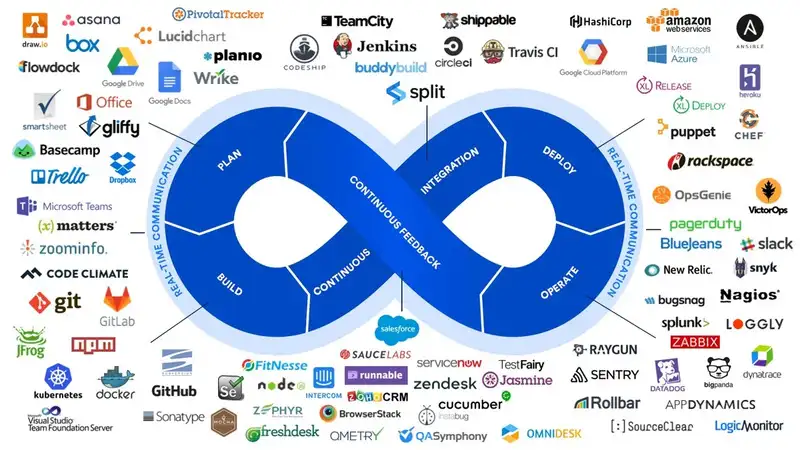
Open-source software quietly powers most of the modern internet. From the databases storing billions of records to the runtimes executing your JavaScript at blazing speed, open-source tools form the invisible backbone of virtually every production system running today. But the ecosystem evolves fast — new forks replace licensing-restricted originals, new runtimes disrupt old ones, and community-driven projects rise to dominance almost overnight.
This guide covers the best open-source tools every developer should know in 2026, organized by category — from beginner essentials to advanced production infrastructure.
Why Open Source Matters More Than Ever
In 2026, choosing open-source tools is no longer just an ideological decision — it’s a strategic one. Open-source tools offer freedom from vendor lock-in, self-hosting options, transparency into security vulnerabilities, and vibrant communities that fix bugs and ship features faster than any single proprietary vendor. The fastest-growing tools on GitHub in 2025 were predominantly open-source projects, driven by massive contributor activity across categories like AI, infrastructure, and developer tooling.
Cost pressure also plays a role: as companies optimize spending post-2024 funding cycles, replacing expensive SaaS subscriptions with self-hosted open-source alternatives has become a mainstream engineering decision.
Containers and Environments
Docker
Docker remains the single most transformative tool in modern software development, and in 2026 it’s more essential than ever. Instead of installing dependencies directly on your machine, Docker lets you run applications inside containers — isolated units that package runtime, libraries, dependencies, and configuration into one portable artifact. This means your app runs identically on your laptop, in a CI/CD pipeline, and in production.
Docker’s ecosystem has deepened significantly: Docker Compose handles multi-container orchestration for local development, Docker Hub provides a massive registry of pre-built images, and deep AI/ML integration makes it the default environment manager for machine learning workflows. If you’ve avoided Docker so far, 2026 is the year to change that.
Kubernetes
Once you outgrow Docker Compose, Kubernetes (K8s) handles containers at scale. It automates deployment, load balancing, auto-scaling, and self-healing of containerized applications across clusters. Kubernetes is used by the majority of cloud-native organizations, making it the industry standard for production container orchestration. Used alongside Terraform, Kubernetes enables full-stack infrastructure management entirely in code.
Databases
PostgreSQL
PostgreSQL is the world’s most advanced open-source relational database, and its dominance has only grown in 2026. It supports advanced SQL, JSON querying, full-text search, and — critically for AI workloads — vector similarity search via the pgvector extension, enabling Retrieval-Augmented Generation (RAG) pipelines without an external vector database. It’s free, battle-tested, and runs everywhere from local laptops to global cloud clusters. Learning PostgreSQL properly, including indexing strategies and query optimization, is one of the highest-ROI skills any backend developer can acquire.
Redis and Valkey
Redis is an in-memory data store used for caching, session management, pub/sub messaging, and rate limiting. Because everything is stored in memory, Redis delivers sub-millisecond response times that relational databases simply can’t match for hot-path queries.
An important 2026 update: in 2024, Redis changed its licensing model, prompting the creation of Valkey — a community fork under the Linux Foundation with a BSD license. Today, both Redis and Valkey coexist, and runtimes like Bun support both seamlessly. Your Redis knowledge transfers directly to Valkey, so learning either serves you well.
Backend and Runtime
Bun
Bun has emerged as one of the most exciting open-source runtimes of this generation. It’s an all-in-one JavaScript toolkit that bundles a runtime (like Node.js), a package manager dramatically faster than npm, a bundler, and a test runner — all in a single binary. Its package installation is often 10–25x faster than npm, and it natively supports TypeScript and JSX without configuration. For developers frustrated by Node.js’s complexity and slowness in large monorepos, Bun is a game-changing productivity upgrade in 2026.
Supabase
Supabase is the open-source Firebase alternative that runs on PostgreSQL. It provides authentication, real-time subscriptions, auto-generated REST and GraphQL APIs, file storage, and Edge Functions — all in one platform that you can self-host with Docker. What makes Supabase exceptional in 2026 is its AI-readiness: built-in vector search powers RAG applications natively, making it the go-to backend for AI-augmented products. Its generous free tier and self-hosting flexibility make it perfect for side projects and production workloads alike.
Infrastructure as Code
Terraform and OpenTofu
Terraform revolutionized infrastructure management by letting developers define cloud resources — servers, databases, DNS records, Kubernetes clusters — as declarative configuration files (HCL). Like Docker for apps, Terraform ensures your infrastructure is reproducible and version-controlled.
An important fork story mirrors Redis: after HashiCorp changed Terraform’s license in 2023, the community created OpenTofu, a fully open-source fork under the Linux Foundation. In 2026, both Terraform and OpenTofu are actively used, with OpenTofu gaining significant enterprise traction. Terraform supports over 1,000 providers spanning AWS, Azure, GCP, Kubernetes, Cloudflare, and more, making it essential knowledge for any DevOps or platform engineer.
Monitoring and Observability
Prometheus
Prometheus is the open-source monitoring system used by 77% of organizations running cloud-native technologies — the highest adoption rate in its category. It scrapes metrics from your applications and infrastructure at configurable intervals, stores them as time-series data, and enables powerful querying via PromQL. It works natively with Kubernetes, making it the default choice for microservices monitoring. In 2026, Prometheus is a foundational layer of the production observability stack.
Grafana
Grafana is the visualization layer that makes Prometheus data understandable. It connects to Prometheus (and dozens of other data sources) to build beautiful, interactive dashboards for real-time infrastructure, application, and business metrics. The recommended production monitoring stack in 2026 combines Prometheus for collection, cAdvisor for container metrics, and Grafana for visualization — all open-source, all self-hostable, and all deeply integrated.
Search and Data
Elasticsearch
Elasticsearch is the industry-leading open-source distributed search and analytics engine, powering everything from e-commerce product search to security log analysis. Built on Apache Lucene, it supports full-text search, structured queries, fuzzy matching, geospatial search, and real-time analytics over billions of records. In 2026, with OpenSearch (Amazon’s open-source fork) also available, the ecosystem gives developers genuinely powerful, self-hosted alternatives to expensive proprietary search services.
MinIO
MinIO is a high-performance, S3-compatible open-source object storage system designed for self-hosting. It’s the tool you reach for when you need file storage without AWS S3 costs or privacy concerns. Because MinIO is fully API-compatible with S3, any tool built for S3 works with MinIO without code changes. It’s Kubernetes-native, blazing fast for high-throughput workloads, and gives you complete data sovereignty — a crucial consideration in 2026 for companies under GDPR or similar data residency requirements.
Automation and AI Tooling
n8n
n8n is an open-source workflow automation platform that rivals Zapier and Make, but with one critical advantage: full self-hosting. It connects hundreds of services via visual node-based workflows and has become especially powerful in 2026 as a glue layer for AI pipelines — chaining LLM calls, database operations, API requests, and notifications into automated workflows. For developers building AI-augmented applications or internal automation without vendor lock-in, n8n is indispensable.
Cline
Cline is an open-source autonomous AI coding agent that runs inside VS Code. Unlike simple autocomplete tools, Cline can plan multi-step work, execute terminal commands, edit files across your codebase, and even spin up a browser for end-to-end tasks. It supports multiple model backends (OpenAI, Anthropic, local Ollama models), keeping you in control of cost and privacy. In 2026, Cline represents the frontier of AI-augmented development tooling that respects open-source principles.
Developer Environment
Visual Studio Code
VS Code remains the most popular code editor in the world and is open-source under the MIT license (with VSCodium as a fully libre alternative). Its strength lies in its ecosystem: in 2026, must-have extensions include GitHub Copilot for AI completion, GitLens for enhanced Git integration, ESLint and Prettier for code quality, Dev Containers for containerized development environments, and Error Lens for inline diagnostics. VS Code’s remote development capabilities also make it the editor of choice for cloud-based and containerized workflows.
Tools by Experience Level
| Level | Recommended Tools |
|---|---|
| Beginner | Git, VS Code, PostgreSQL, Postman |
| Intermediate | Docker, Redis/Valkey, Supabase, Bun |
| Advanced | Kubernetes, Terraform/OpenTofu, Prometheus + Grafana, Elasticsearch, n8n, MinIO |
How to Choose What to Learn First
The ecosystem is vast, and trying to learn everything in parallel is a path to burnout. A practical framework: start with the tools your current project needs immediately, then expand upward along the stack. Every developer should know Git, VS Code, and PostgreSQL before anything else — these three alone unlock participation in almost any team.
From there, Docker is the single highest-leverage next tool to learn: it unlocks local parity with production, CI/CD understanding, and the entire container ecosystem in one shot. Once you’re comfortable with Docker, every other tool in this list becomes dramatically easier to adopt.
The 2026 developer stack is more powerful than ever. Every tool here is free, self-hostable, and backed by communities that will outlast any single vendor. That’s a foundation worth building on.